
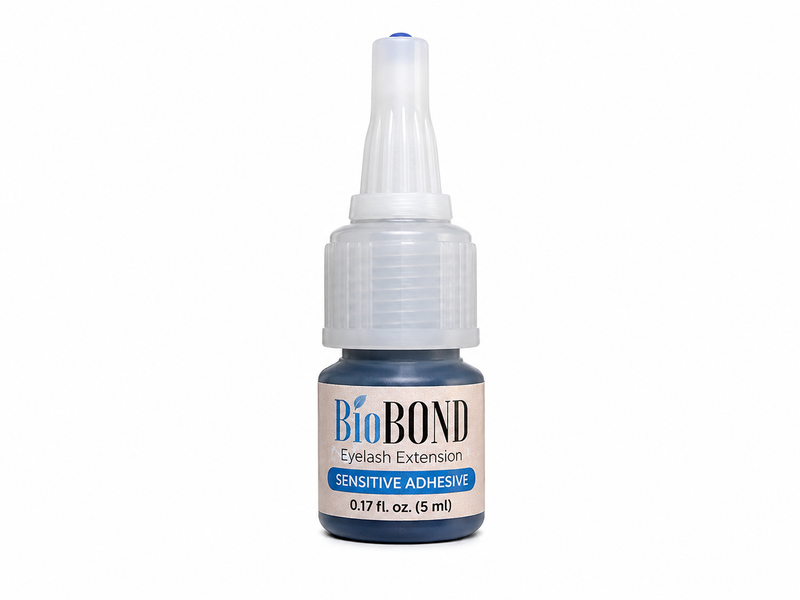
n-Butyl cyanoacrylate (often written as Butyl cyanoacrylate) is one of the cyanoacrylate monomers used in specialty adhesives. Compared with ethyl cyanoacrylate (the most common ingredient in eyelash adhesives), it has different performance characteristics.
What it does in an eyelash adhesive
1. Improves flexibility
-
Forms a more flexible bond than ethyl cyanoacrylate.
-
Helps the adhesive resist cracking when natural lashes move.
2. Produces lower fumes
-
Polymerizes a little more slowly, which generally produces fewer irritating vapors.
-
Often chosen for formulations marketed as low-fume or sensitive adhesives.
3. Reduces brittleness
-
The cured adhesive tends to be less rigid.
-
This can make extensions feel more comfortable and reduce bond fracture.
4. Can improve comfort
-
Many users experience less eye watering, burning, or nasal irritation compared with adhesives made primarily from ethyl cyanoacrylate.
-
However, it is not hypoallergenic and can still cause allergic reactions.
Performance compared with Ethyl Cyanoacrylate
| Property | Ethyl Cyanoacrylate | n-Butyl Cyanoacrylate |
|---|---|---|
| Cure speed | Very fast | Slightly slower |
| Bond strength | Very high | High |
| Flexibility | Lower | Higher |
| Brittleness | Higher | Lower |
| Fumes | Higher | Lower |
| Comfort | Good | Better for sensitive clients |
Why it's used in BioBond
Your BioBond formulation uses high-purity n-Butyl cyanoacrylate as the primary adhesive ingredient. That helps explain why it is marketed as a sensitive adhesive:
-
Lower fumes
-
Greater flexibility
-
Better comfort for many clients
-
Good retention while remaining gentle compared with typical ethyl-based adhesives
Is it medical grade?
n-Butyl cyanoacrylate is also the active ingredient used in some FDA-cleared topical skin adhesives (medical tissue glues), where it is used to close skin wounds. The purity requirements and intended use for medical products are different from cosmetic eyelash adhesives, but it demonstrates that this chemistry has a long history of safe use in appropriate applications.
Can someone allergic to regular lash adhesive use it?
Sometimes—but not always.
If someone only experiences:
-
itchy eyes,
-
watering,
-
stuffy nose,
-
irritation from fumes,
they may tolerate a butyl-based adhesive much better than a traditional ethyl-based adhesive.
However, if they have had a true allergic reaction—for example:
-
severe eyelid swelling,
-
redness that lasts for days,
-
blisters,
-
oozing,
-
pain,
they may still react to butyl cyanoacrylate because allergies are often directed at the cyanoacrylate family rather than a single type. That's why recommending a patch test before a full application is the safest approach.